The Value of Values ft. Akash Khurana

Updated: Dec 5, 2025
"Don’t reinvent the wheel. Don’t try and ‘better’ what has come before to prove a point, or to prove yourself. That’s where the real danger lies, that need for making a mark or scaling up or whatever." Akash Khurana shares his negotiables and non-negotiables for theatre, writing, sustainability and life.
So, we’ll start with an easy question. What was your first play?
In life? it was in school. The Real Princess. It's a fairy tale. I was 4, 5, 6, 7, I don’t remember. But I remember the mattress and the peas under the thick mattress. Because the real princess would feel the peas.
I was the princess. So, I wore a lovely pink, lacy frock.
Then I found a mentor in school. A very hard task master - Red House master. He trained me for elocution, pushed me into theatre.

In Bombay, my first play was with Anmol Vellani. Vaclav Havel’s The Memorandum. His father Zul was in it. Farid Currim was in it. Hameed Jaffrey, Saeed’s brother.
Oh wow. So many worlds colliding. How did that happen?
I had a day job in Bombay, and suddenly someone said there's a part, you do it. It was as simple as that.
And then Anmol’s girlfriend, Sarita was doing some work for the Alliance. She contacted Sunil Shanbag and said there are plays we want to do. So, Sunil directed The Unknown General by Rene de Obaldia. I acted.
Then Sunil introduced me to [Satyadev] Dubey. He did a play called Abe Bewaqoof. I acted. My first play with him.
Then Jennifer [Kapoor] saw us in a Harold Pinter play at Prithvi, where she saw the thrust stage being used for the first time.
Next Shyam [Benegal] was casting for Kalyug. He cast Sunil and me in it and we got our first film break.
So that's the sequence. You asked for first play, I gave you the full sequence.
Now, if I lay it all out like this, it feels, very, very packed. Very dense, full.
But at the time it was one thing led to the next. It snowballed. And we kept immersing ourselves in it. Anyone interested in joining the dots and filling in the blanks can read my book Mentormorphosis.
Do you think we’ll see stories like this from today? There is so much focus on sustainability and investment – both creative and financial…
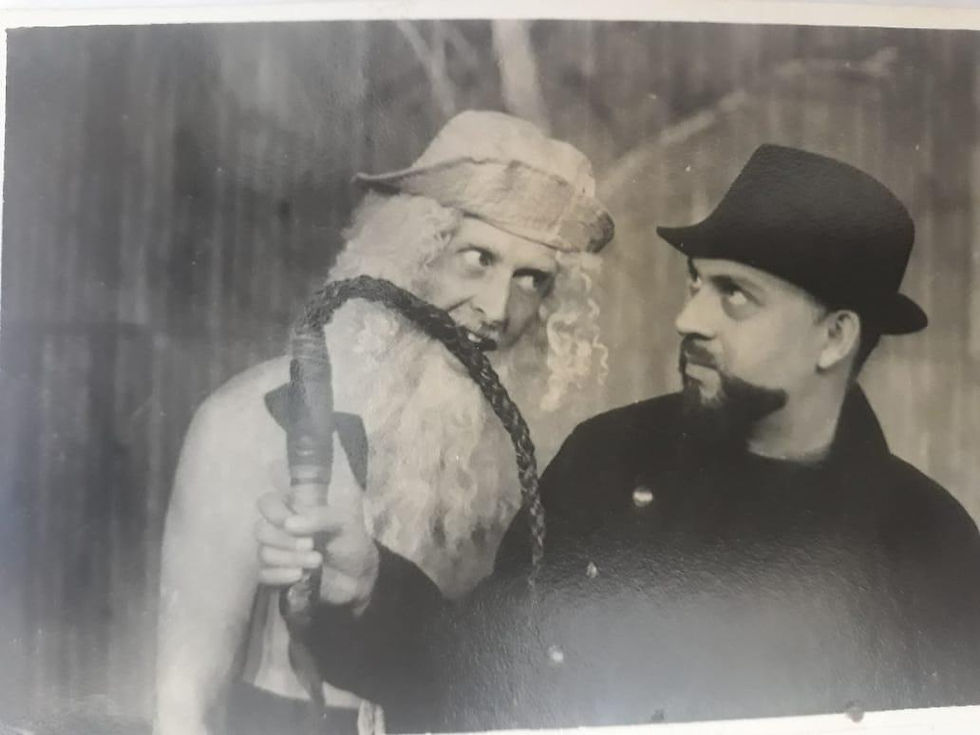
You see, we were not just theatre workers. Amol Palekar. Amrish Puri. All the people in the Theatre Unit had jobs. Banks, Insurance companies. Architects. All full-time day jobs. That was how sustainability came into play.
![As the Commander’s statue and Ratna [Pathak Shah] as Dona Anna in George Bernard Shaw’s Don Juan in Hell directed by Satyadev Dubey 1982](https://static.wixstatic.com/media/30702a_b141ff00d26a403ebee3331288556d23~mv2.jpeg/v1/fill/w_834,h_1280,al_c,q_85,enc_avif,quality_auto/30702a_b141ff00d26a403ebee3331288556d23~mv2.jpeg)
Though Dubey blew up his own money to produce plays.
The problem is that these days survival becomes as important as creating work. Your passion, the thing you started with, the thing that set you apart and gave you a voice, all of that becomes functional. You’ve lost your prime mover. Your hobby is now your job.
Some hobbies become vocations, sure. But sometimes, it becomes hard to deliver quality if that struggle for sustainability continues.
That’s an accurate assessment, however bleak.
Among all the plays you’ve done, is there a play you want to revive?

No. The passion to revive, to re-address, to re-navigate… If I have that energy, I would rather do something new.
What’s done is done. It has completed itself, given its worth. I may admire it. I may even miss it.
But what about The Tragedy of Ham MacLear? That was a re-visit of a sort, at least of Shakespeare.

Yes. It was born out of a need to revisit Shakespeare, during the pandemic. But I found a purpose. I needed to innovate to make it interesting for myself. I decided I would read about 10-15 Shakespeare plays, only to extract thoughts that could link up some core condition.
It actually started as a project where I would use only Shakespeare's lines for a two-hander conversation. I built it up to a point and then I had to abort because the exposition just did not happen. Which meant I had to have another device.
Which was...?

Excerpts of Shakespeare plays within a play. The story of a fading actor and his two proteges. Then I gave him something, a deteriorating medical condition. And to make it optimistic, created his therapy. Singly, none of these are unique ideas or devices. But when they came together, they seemed to mix really well. It became gestalt - greater than the sum of its parts. Something everyone wants their plays to be. Or they should, at least.
Was it the first play you wrote and directed yourself?
It’s the first play I wrote and directed.
Imagine having a first at the age of 70.
Indeed! Speaking of age. I don’t get a chance to ask this next question because we usually talk to younger people. But I wanted to ask you about fatherhood. And what that did to your art. Or what your art did to your fatherhood.
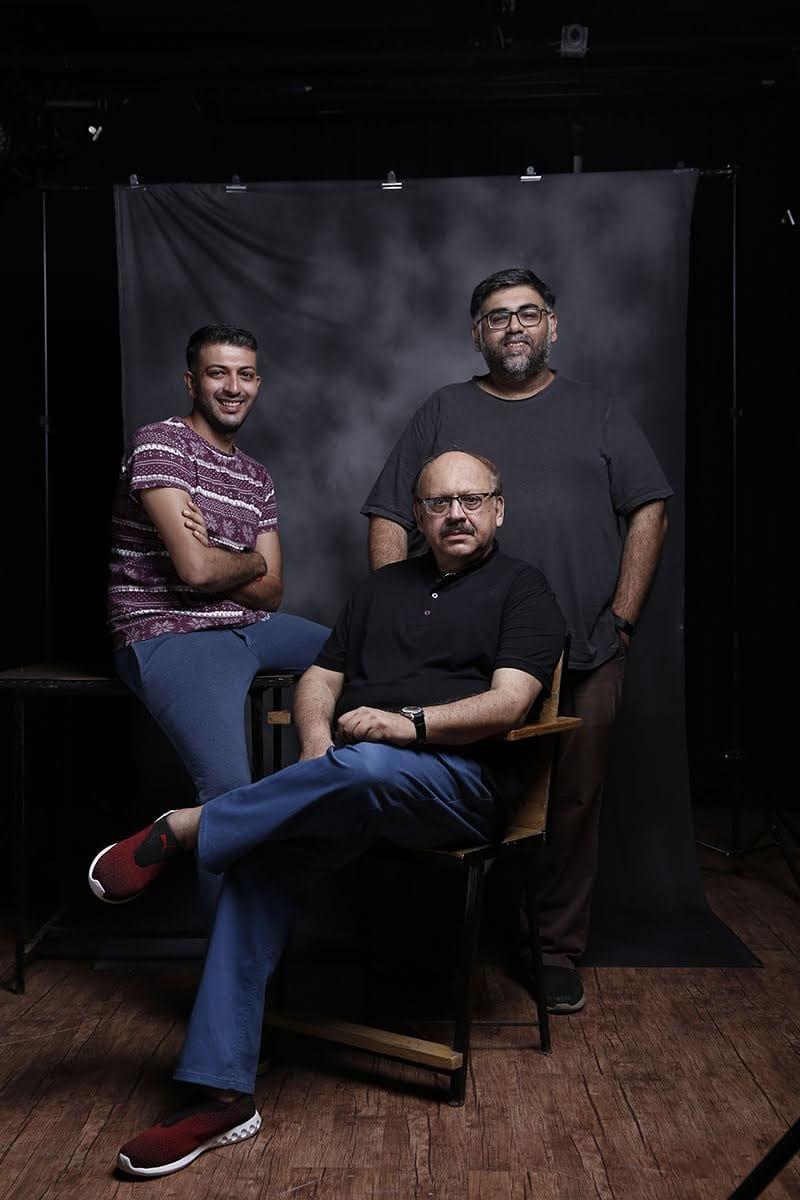
I've always devoted time to the family. Unquestionably. But it has been without the responsibility of being a father, barring the biology. Meaning, it's just watching people of different ages grow. It’s like two younger friends, two mates, buddies, younger siblings.
But it's never been a separate role - fatherhood.
And whether it did anything to my art or my practice... It's life's rehearsal room; there were two new people joining, and I was - what I call - a venerable mentor or a bedrock mentor to them.
So, in that sense, good fathers are mentors. Gurus. They teach you about the ways of life.
But I never needed to explain this to the boys. It was just organic, whatever they understood. Guru’s in a bad mood, guru’s in an okay mood, guru loves us.
That’s a great segue for my next question! You’re a management Guru. If you were given Indian theatre as a project to set on its path... What would your recommendations be?
Get people with values. Get potential authentic leaders. Not followers. Not people just doing the job.
There has to be a culture of learning. People have to participate, evolve. Or it leads to a lot of struggle.
This word, ‘strugglers’, why is it glorified? Because strife and struggle will never make you creative. It will only create angst. You'll get bitter.
Maybe that's why you see the fraternity is full of angry people. There's no love. There's a lot of envy, a lot of entitlement.
So a lot of the work is also angry. Or angsty. Its value is only to the people who have made it, it’s cathartic for them. But it also has to have value to other people.
I would say that there needs to be a conversion process. A chain. You need mentoring for mentors. Facilitation for facilitators. Every single person being facilitated is himself or herself simultaneously a subgroup facilitator. And the smallest unit of the subgroup is the self.

Can you break that down a little?
Okay. Most of the work I see, a lot of it is brilliant. But there is a tendency for the work to be dominated by its creator, instead of the reverse. The work has not been directed, it has been led. It's not been facilitated or mentored, it's been imposed. When we say a work is heavy-handed, or indulgent, that's probably what has happened.
I must only see the work. Not that indulgence, that “I have done it.”, that creeps through.
And Abhishek [Majumdar] is the only guy who stops just short of it.
Because there's so much integrity and credibility, and lack of gimmickry in what he does. He can be a role model! There is reading, learning, participation, evolution, all of it in his body of work. (I am deliberately keeping Akvarious out of this.)
Leader. Mentor. Director. Now you’ve thrown in authentic leader. Where does the sense of responsibility lie with each role? Is there an overlap?
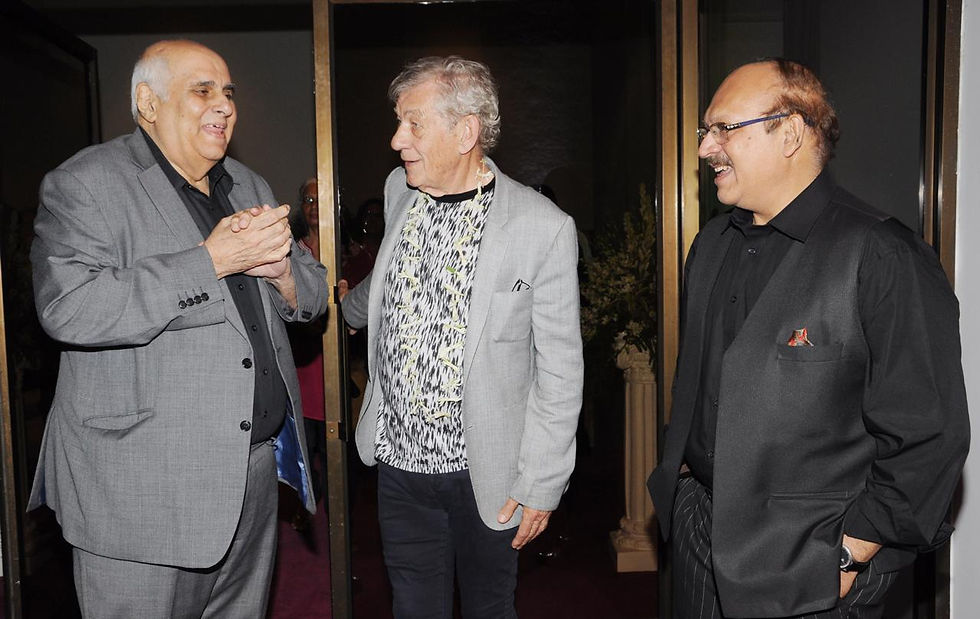
Interesting. Let's blur the lines between them. 'Leader' is really a loose, macro, universal term.
A director is a leader. A teacher is a leader. I mean, anybody is a leader. Because everyone influences someone. So, in a sense, a leader of a project or a play or a class or whatever, has shared some experience. Good or bad. For other people to learn, either from mistakes or from excellence.
But a leader in isolation, in essence, needs to be an authentic leader.
And a mentor is an authentic leader. Which means having certain traits.
Passion. Integrity. Commitment. Collaboration. Mutual Trust. And the ability to analyse. Not to look at failure and success but at an aggregate of experience.
And how do you decide which one to be at which point in life?
Again, interesting. I will just jump to another analogy. I alluded to it earlier.
I wrote a paper in HR called JoCaVo. It's an acronym - Job. Career. Vocation.
A job is typically short term. Transactional.
Career is you building on strengths for the slightly longer term.
Vocation is you honing your skills along with the passion that you have for something.
So really the three things that you asked me are that.
Director is a job. Leader is a career. Mentor is a vocation.
But does that mean you treat a directorial experience as just another job? Sure, you can. But if directing is your vocation, if theatre is your vocation, then the distinction again blurs. You will automatically bring in some of those traits I mentioned earlier.
You’re also a teacher. Is that a career? Or a vocation? This will be especially interesting because a lot of theatre people teach to make ends meet. And I find the personalities are not distinct.

The distinction is in the responsibility - direction is collaborative, teaching is slightly one way.
As a director you are a facilitator, as a teacher you are more an instructor.
Both require planning, extensive research, you need to know your material.
But as a teacher, your class may not be greater than the sum of its parts. You may not always get their input, though you may welcome it if it emerges.
As a director, you should want input from your collaborators - actors, designers, whatever.
You do so many things! Teach, write, act, direct, read, train. What is your relationship to tasks? Are you able to work unsupervised? Are you a self-driven person?
Oh, absolutely. Absolutely. I think I have only one real skill. Or one core skill - time management.
And there is no better skill for anyone, anywhere, to have or to develop. Especially performing artists or theatre workers.
Just stick to time. Value your time.
More gets done. You are on top of time, rather than serving it.
So, Sunil's rehearsal [for The Horse], Sunil and I would invariably reach half an hour before rehearsal time. That was quality time. That's how performances evolve.
Trust me. Punctuality. That one single discipline will change your life.
Is that in your book?
It is in my first book [Mentormorposis]. When I speak about my role model, my iconic mentor Leonardo da Vinci. How one can be a polymath. He died at 47. And did so many things!
People ask me “How do you do so many things?”. It’s obviously a question of time management. Of multitasking. Because if you take it sequentially, I would be 200 years old right now.
But if you do it in tandem… That’s the only way.
It's odd you bring up that word. Because that was my next question. About being a polymath. Do you believe that you could have done anything? Been a doctor or a lawyer or someone who drills oil wells…?
I could have been. Except as I said, it's a question of time.
See, it would have taken me 8 years to be a doctor. In those 8 years I did engineering and an MBA. And in another 10 years I did my M.Phil. and Ph.D.
Sure, I could have been a doctor. If there was no other profession available and that was the only option. In that case, rather than sit and idle I would have become a doctor, or a rocket scientist. Or anything.
I'm asking from the point of view of ability. Because you display several talents and interests...
See, that’s where choice comes in. Choice, temperament and interest.
To be honest, there is not much I have not done, within my available or chosen worlds. The worlds of creativity, science, business, technology, authorship, academia. I mean it's a swathe. It's a proper swathe of things.
The cautionary tale here is that I'm a master of none. And I never wanted to be. Again, a choice.

Was this the case early on? Before you did your mechanical engineering. Did you know that you had this?
Not in the formative years. One did everything in school. Three or four sports. School captaincy. All that nonsense. Through school and college.
I eventually played eight games across school and college, at various levels of competition. Elocution right from the age of five. Studied for a first division in science. Went for engineering.
How did that suit you? Engineering?
My favourite place in engineering school was the library. Where I never visited the technology section.
Hahahahahaha! I'm not surprised.
Believe you me, in that relatively low-profile campus at REC Rourkela [now NIT Rourkela], they had arguably the best library in the country. Clearly, they had the funds and someone used them well. I went back in 2014 and even then, it was an outstanding library. As good as if not better than the one at XLRI.

They’ll be thrilled to read this. And when did the habit of reading start for you? The preoccupation with books?
Reading had started at the age of eleven. All the classics - Charles Dickens, Andre Gide, Alexandre Dumas. The unabridged versions! I started Crime and Punishment, that took me a few years to get through.
See, this is the advantage of small towns. There are clubs, they have libraries. And their libraries are just havens. You go to the club because there’s nothing else to do in the evening. You play a game of badminton. And while you wait for parents to come or for the food to come, you are in the library surrounded by the smell of leather. Borrowing books. And you just read.
By seventeen I was writing short stories. Yeah.
Okay this isn't a sycophantic question. When did you discover that you were blessed with inspiration? If I can call it that. Did you ever discover it? Or is it all in hindsight?
This is an interesting question. When did I decide I was a polymath, or when did I decide to become a polymath. I didn't decide. It wasn't self-awareness of any kind. It was temperament.
I got bored of something, just did the other.
And thank God for mediocrity. Because I excelled by default, no? I was surrounded by average. And I was average myself.
Where does money come into all this? Because money today is a big issue in the performing arts.
My relationship with money is unfortunately or fortunately terrible. See, my threshold of needs is very low. I've never aspired for anything. As long as it's happy coverage, and some security. Then I'm okay with belongingness and self-actualisation.
And again, I think what came to my rescue was my ability to multitask.
That’s something I would advise all young people to do. Find something else to do. And securitise it. Don't say this OR that. It has to be this AND that.
What are your other skills? What did you do in school? Did you do science, biology, I don't know... I don't know. But find something. The greatest of actors in Hollywood have been menial janitors and waiters and waitresses.
I've often wondered about why that doesn't happen here.
It doesn't happen here at all! Take this place for example [Sathe’s All Day Diner]. You would never find actors working here. That's a problem. It's a great place for actors to be. You are here. I am here. Akarsh comes here. Many other directors, writers, producers, educators come here.
Come talk to us, tell us about you, exchange numbers. I understand that the dignity of labour that exists in the West is not the same here, though it's not all hunky dory there either. So even if you don't want to work here, come volunteer your time. There's a theatre, you can watch plays every day, learn things...
See the tragedy of it. Somewhere else in the world, this place would be a hub!
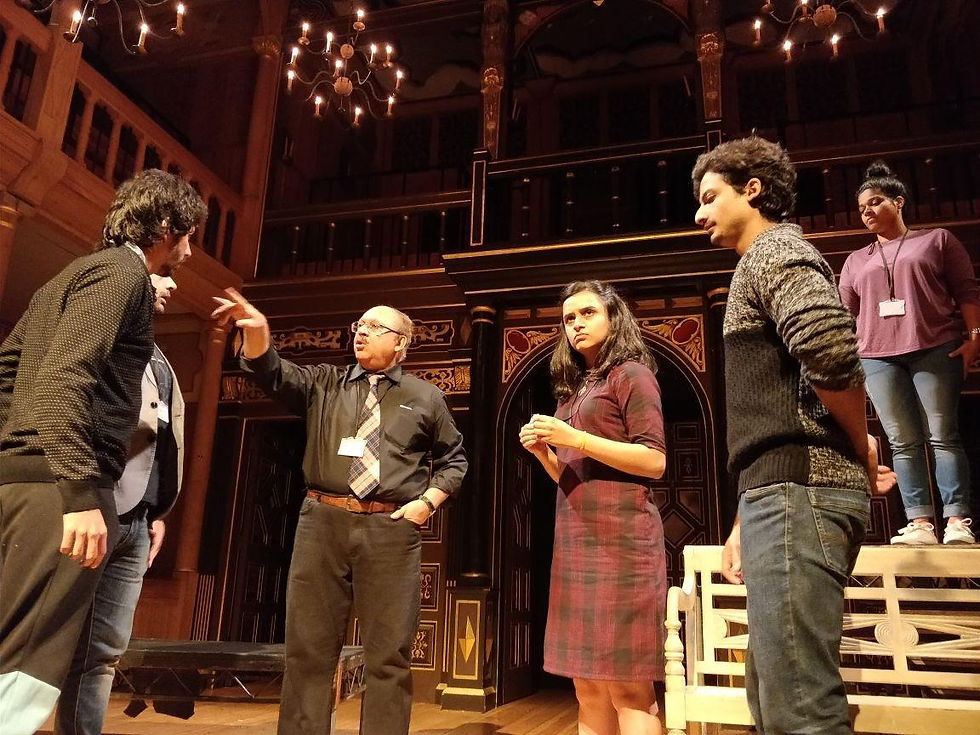
Okay, let us switch tracks now to Akvarious. What do you think of what you've achieved?
I think it's wonderful. It's an aspirational model. In a sense, it's one of the few independent studios continuously creating work. And I think what is commendable is the sense of balance. Between prolific growth and creativity.
There is clearly a vision at play. And that vision is guided by both the left and the right sides of the brain. If at any point, one side dominates, then there is a correction with the next project or with the next collaboration. It is about certain core competencies and values at work. And it is commendable.
Guru khush hua?
Hmmm…?
Hahahahahaha! Moving on swiftly. Were there any Akvarious plays that surprised you? For whatever reason?

A few. I think the first was Baghdad Wedding. It was just not a play I imagined in the ouevre, at the time. It was ahead of the learning curve, I think it boosted the learning curve. And the audience curve.
What Planet Are You On? The writing, the approach to it really surprised me. Again, the balance of the left and right side. Topical play, relevant topic, treated with generous amounts of creativity. I had never seen a play about a mental health issue being delivered with such deftness and elegance. Everything, the writing, the design, the performance, the duration.
And most recently, Sissy. Young writer-director, confident voice, I'm glad Akvarious backed it. And also economical with words, highly effective.
I keep saying that the duration of plays needs serious thought. Not because of attention spans and whatever. Duration must aid truth telling, must be at the service of information or emotion the audience needs, not what the makers need, or what they think the audience needs. It's not a classroom, no? With portions to cover.
Last couple of questions now. You spoke of duration. What about longevity? What is the merit of an arts organisation lasting? Of building institutional memory?
See, the moment you say institutional memory you're essentially talking about inspirational stories and best practices. Best practices means the work ethic. They don't mean the infrastructure.
Don’t reinvent the wheel. Don’t try and ‘better’ what has come before to prove a point, or to prove yourself. That’s where the real danger lies, that need for making a mark or scaling up or whatever.
You have to be very aware of the context. Of what that memory means, personally and institutionally. Or else there’s no point lasting.
If you’re an individual, memory can, like pollen dust, be thrown out in the universe and that's it. But if you’re an institution, and you decide that you want to last, then you need to examine your motivations for lasting.
And how do you want to be remembered?
I don’t know about how I want to be remembered. But I think I will be remembered as a teacher. I get most of my emails now asking me to come lecture at colleges and universities. Especially after the book came out.
Friedrich Nietzsche said that if he got his ideas through to even one student, that's the gratification of life.
I still get emails from students, 20 years later, of having touched, transformed their lives. Two or three of them. But somewhere it made a difference. They remember.
--


Comments